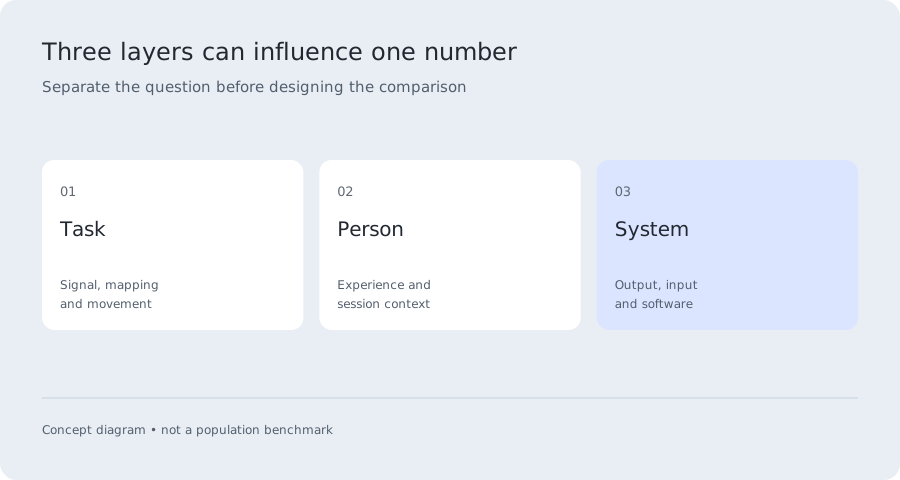
Three layers of factors affecting reaction time.
Factors affecting reaction time can be organized into the task, the person and the measurement system. The task specifies what signal appears and which response is required. The person brings experience, attention and other characteristics. The system includes the display or sound output, input device and software. A recorded interval can reflect all three layers.
This framework helps prevent a common mistake: attributing every difference to biological reflex speed. A choice task may take longer because it requires selection. A touchscreen may change the measured interval because the input path and movement differ. A long response during an interruption may reflect circumstances that a simple score does not explain.
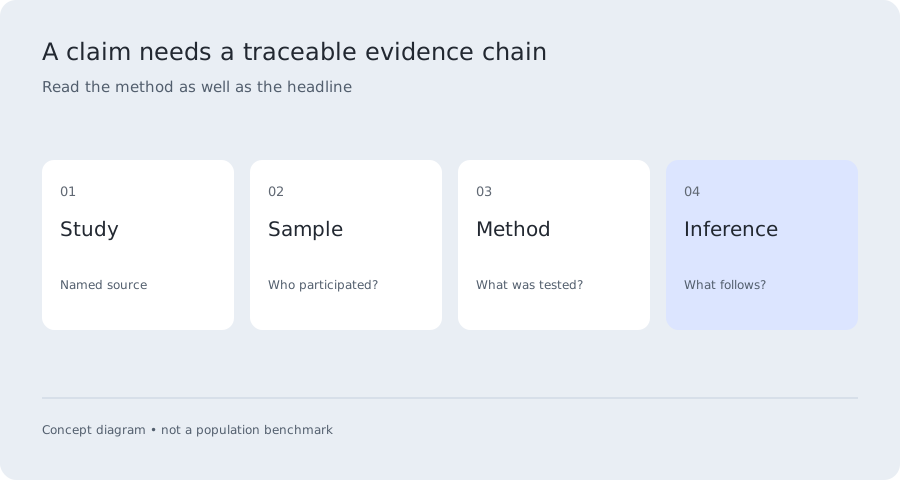
The table below connects selected factors affecting reaction time with a source and a practical control. It is not a list of universal millisecond penalties. The effect of a factor depends on the task, sample and measurement method, so adding estimated penalties together would create false precision.
Evidence for factors affecting reaction time.
Task complexity is a direct experimental choice: requiring selection among alternatives changes the work performed. The WPI browser studies separated decision demands from target-selection dexterity. Equipment effects require a different kind of evidence, such as the calibrated apparatus used by Woods and colleagues. Neither source provides one correction for all online tests.
Fatigue is another relevant influence. CDC/NIOSH describes effects on responses and attention in its occupational guidance. That supports recording fatigue-related context; it does not let this website determine whether fatigue caused one person’s result. We do not recommend deliberately depriving yourself of sleep to demonstrate an effect.
Age is addressed in a separate guide because interpreting an age association requires careful attention to the sample and task. The factors affecting reaction time table is a starting point for selecting a comparison, not a replacement for reading the source and its methods.
| Factor | Evidence and limit | Practical control |
|---|---|---|
| Task complexity | Jiang et al., 2020: browser decision and dexterity tasks; effects belong to those protocols. | Keep options, mapping and movement demands fixed. |
| Equipment | Woods et al., 2015: calibrated visual measurement; corrections were apparatus specific. | Keep the same screen, input and browser; document changes. |
| Fatigue / attention | CDC/NIOSH guidance: fatigue can slow responses and affect attention; not a personal diagnostic test. | Record ordinary context; avoid intentional sleep restriction. |
| Age | Adult task studies describe sample associations; do not predict every individual. | Match age coverage and task; report group sizes. |
| Practice / familiarity | Repeated task exposure changes familiarity; distinguish it from the variable under study. | Use a familiarization phase and balance condition order. |
Study factors affecting reaction time one at a time.
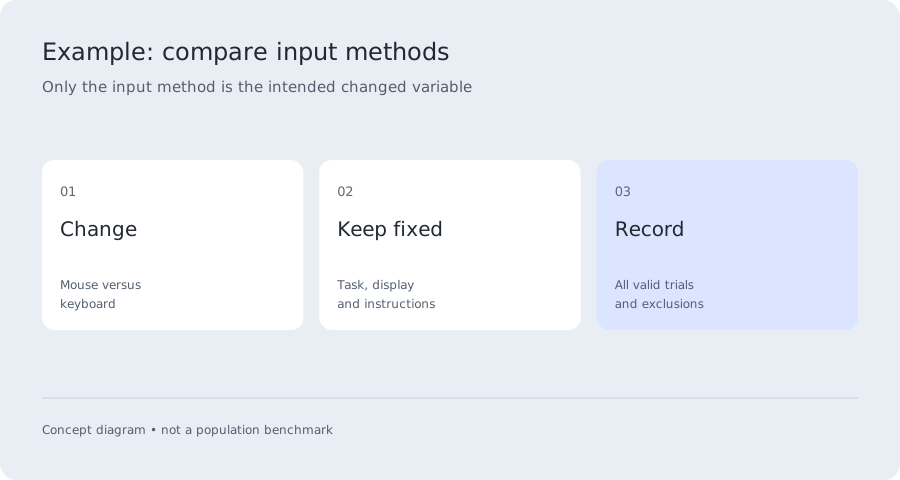
For a classroom or personal experiment, choose a narrow question such as whether your keyboard and mouse sessions differ on the same visual task. Define the changed condition before testing. Keep the signal, waiting-time behavior, number of trials and instructions consistent. Use the worksheet above to name the condition and record the setup.
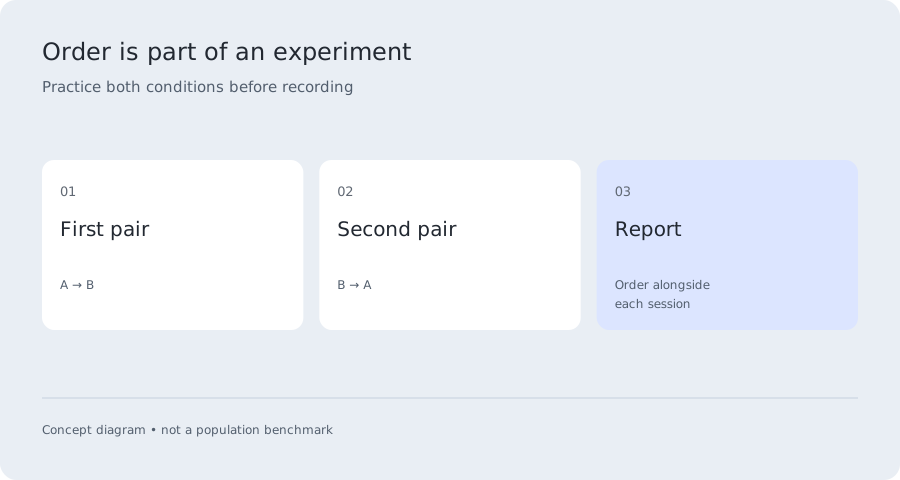
Complete a familiarization session before collecting the observations you intend to compare. Then use both conditions in a balanced order: A followed by B, and later B followed by A. This reduces the chance that every B session occurs after more practice. It does not remove every source of variability or make a small experiment representative of everyone.
When investigating factors affecting reaction time, write an exclusion rule before looking at the outcome. Early responses are not valid reactions to the displayed signal. Interruptions should be labelled. Valid slow responses should not disappear just because they weaken the expected result. Preserve the raw observations and report the rule with the summary.
Report the pattern and the limitations.
Use the same summary for every condition. The worksheet calculates a median, mean and range from all supplied valid values. Include the number of observations and any errors or exclusions in your notes. For a choice task, report accuracy separately; correct-response speed alone does not describe unsuccessful decisions.
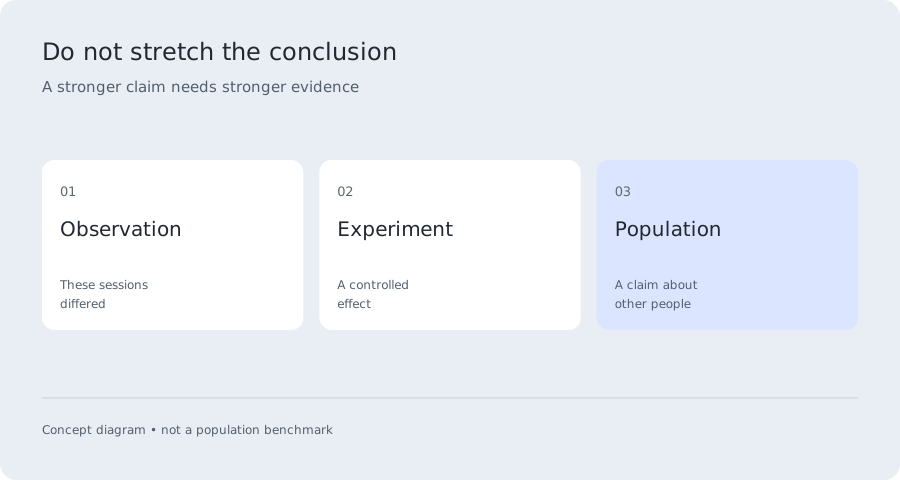
An illustrative A/B comparison might show a 240 ms median in A and 230 ms in B. The arithmetic difference is ten milliseconds. Without repeated observations and an appropriate analysis, that difference alone does not establish a reliable effect. The direction may change on another day, or it may track order rather than the intended condition.
In reports about factors affecting reaction time, distinguish observations from interpretations. “The median was lower in these B sessions” describes data. “This device makes everyone faster” extends far beyond a small personal comparison. A useful result can be an unresolved difference that motivates a better-controlled repeat.
Do not turn group differences into personal labels.
Does gender affect reaction time? The answer depends on the study and task. Woods et al. found no sex effect in their calibrated simple visual sample. That does not prove every protocol will give the same result, and an average difference in another sample would not rank every individual. Report the actual finding instead of treating a demographic category as destiny.
How does fatigue affect reaction time? General evidence supports effects on performance, but there is no universal number to add to a browser result after a poor night. The same caution applies to sweeping claims about stress, caffeine or exercise. This page does not prescribe substances, doses or health interventions to optimize a score.
If you need three factors affecting reaction time for an introductory explanation, use task complexity, equipment and fatigue, and state the different evidence behind each. If you need to explain your own unexpectedly slow session, use the troubleshooting workflow instead. Knowing possible influences is different from identifying a cause in one person.
Questions, answered.
What factors affect reaction time most?
There is no universal ranking across all tasks and people. A large change in task demands can overwhelm a small equipment difference, while an interruption can dominate one trial. Define the outcome and comparison before deciding which factor matters most.
Can I test fatigue by staying awake longer?
Do not deliberately restrict sleep for this exercise. Use a harmless setup comparison such as input method, and record ordinary conditions without trying to induce impairment. A browser task is not a safe way to assess readiness for driving or work.
What should my experiment record contain?
Include the question, changed variable, controlled conditions, task instructions, practice, trial count, raw values, error or exclusion rules and summary statistics. The worksheet retains the session fields; keep your full protocol alongside the download.
Are factors influencing reaction time the same as causes of my score?
No. A factor supported in research is a plausible influence under specified conditions. Identifying the cause of your particular observation requires more evidence. Avoid diagnosing a person from a short set of response times.
Sources & methodology
Reviewed September 21, 2026. Research values belong to the task and sample named below. Illustrative examples are labelled; they are not population data.
Equipment and sample-specific findings, including the reported lack of a sex effect in this protocol.
Browser-based task comparisons; not a universal ranking of all influences.
General occupational evidence concerning fatigue, attention and response speed.
Repeated testing is studied within defined research protocols; do not assume a fixed improvement for this website.